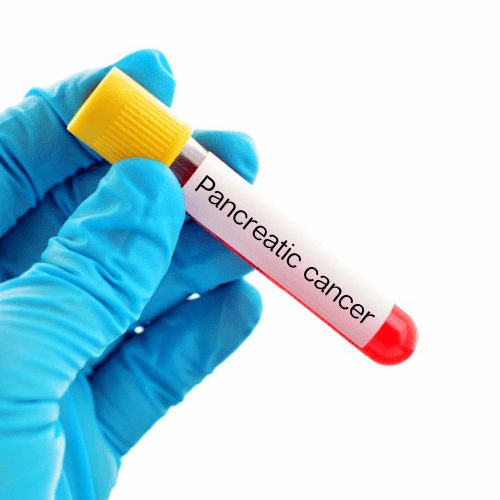
What is a CA19 Blood Test Pancreatic Tumour Marker?
CA19-9 is a modified Lewis (a) blood group antigen and is a biomarker used mainly to monitor patients with pancreatic cancer. It is normally found in fetal epithelial cells in the stomach, intestine, liver, and pancreas. In adults, it is found in small amounts in the pancreas, liver, gall bladder, lung, and salivary glands.
Why get a CA19 Test?
A high level of a specific tumour marker can indicate a particular condition. It helps the oncologist decide the most effective treatment or combination and evaluate how well it worked. Sometimes, tumour markers are used for screening to detect cancer in high-risk individuals before symptoms appear.
1 BioMarker
- CA19-9: measures level in the blood
How does the Pancreatic CA19 Blood Test Work?
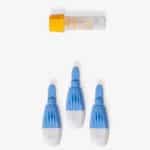
Order your package online and once it arrive collect your sample at your adress.
Then, drop off the Ca19 Sample in the morning to the Royal Mail Red Street Box. Use the Track24/48 Return Label to the Lab.

Lastly, once your results are ready, we will send you an email with your Result. Also you can view the report in your Dashboard.
How long do the results for CA19 levels take?
The target turnaround time is 1-2 working days. The turnaround time is a guide only and sometimes depends on assay run schedules.
Also, please take your sample from Monday to Thursday to avoid delivery delays at the lab.
What are the CA19 Test Kit Instructions?
Please take your sample in the morning. Take it at least one hour before any medication.
When you collect your CA19 sample, try the following tips:
- Drink plenty of water. Being well-hydrated will make it easier to collect your sample.
- Shower before you take your test or run your hands under warm water for a few minutes, as heat improves flow.
- Do light exercise (move around, walk, etc.) to get the blood flowing.
- Put your arm/hand below your heart level – let gravity do the work.
- Nails that are too long can make it difficult to collect a sample.
- Do not shake the sample vigorously, but gently invert the tube 10 times. (Gently swirl the tube after each drop of blood.)
- Do not squeeze the finger (milk).
- Re-warm your hands during collection where needed.
Finally, Good Sample Management.
When you take your sample, please remember to send it to the laboratory on the same day. Do not leave it sitting around for several days; it will have problems when it arrives, and you will need to do it again. Also, note that our samples include tests.
Why Choose Our CA19 Blood Test?
- The Latest laboratory Technology
- Deal Direct Laboratory Best Prices
- Deal Direct Laboratory Best Support
- Pre-Paid Royal Mail Tracked 24/48, Return to Lab Label included.
- CA19 Result Certificate Issued by Confidential Email (No SMS)
- MHRA Registered IVD Devices
- Support via WhatsApp during business hours
What is the Scientific Data from CA19 Pancreatic Blood Test Instrument and Reagent Supplier
Technology Method:
This sample is processed at our sister lab due to efficiencies.
Fluorescence quantitative immunoassay.
Limit of Detection:
Less than or equal to 10 U/mL.
Accuracy and Precision:
The relative standard deviation from the target value is ≤ 15%. The within assay CV is ≤ 15%. The between assay CV is ≤ 15%.
Measuring Range:
10~400 U/mL
Validation-Active Information:
- Samples are Re-Processed at a partner lab for quality-checking
- Inter-laboratory validations
- Periodic according to the validation schedule
- Event-triggered- QC/Calibration/New materials/Batch
Accuracy and Precision:
This method’s accuracy is based on the relative deviation, which is the average deviation from the actual result value.
The precision relies on the within-assay coefficient of variations and the between-assay coefficient. The within-assay coefficient of variations is the variance of the result value if the same sample is analysed again. The between-assay CA19 coefficient is the variance of the result value if the same sample is reprocessed from the beginning again.
In range results:
The reference range for females and males is less than 27 U/mL.
Page Quality Review:
Review Date : 02/01/2025
Reviewed By :
Taylor’s Story: Treatment history
About 3-4 years ago, during a routine ultrasound, I was diagnosed with chronic pancreatitis.
It was very unexpected because I had never had problems with either my pancreas or my stomach. Three years after the diagnosis, a biopsy showed the presence of cancer cells in the body. Although I had no sensations whatsoever, I was not losing weight, I had no pain, I was not nauseous, and there were no signs of the disease. Surprisingly, despite such a widespread process, I had no signs or symptoms.
All tests, except tumour markers, were normal.
The surgeon explained that surgery was impossible because cancer had affected the liver—spreading to all lobes and segments—with multiple metastases. They prescribed only chemotherapy for me. Hoping to gain clarity, I went to Israel, but even there, specialists prescribed only chemotherapy. I decided to undergo treatment. I started the first course of chemotherapy.
Challenges During Chemotherapy
After 2 courses of chemotherapy, I took a test – the marker decreased, but the CT showed negative dynamics: the tumour grew, and the metastases increased. The specialists added one of the potent substances to the chemotherapy, which I tolerated very hard.
I came to the Oncological Research Center, where I saw information about the activities of the Oncostop radiation surgery clinic.
Even though the attending physician insisted exclusively on chemotherapy, I decided to fight for my health and look for possible solutions to the problem. I continued to undergo chemotherapy and came to the Oncostop clinic at the end of October 2013. They put markers on me – I tolerated the procedure without any problems.
Radiation Therapy at Oncostop
At first, they wanted to treat only my pancreas without affecting the liver. However, the chief physician at the Oncostop clinic decided to split the radiation dose between the pancreas and the liver. The device itself reminded me of one of the heroes of space wars – the installation behaved as if it was watching me – the “eye” expanded and narrowed in search of a target – it seemed that the device was doing a common thing with you – it found a tumour and “shot” at it. For a moment, it seemed to me that the robotic installation was alive.
I underwent treatment at the Onkostop radiation surgery clinic for 3 weeks. The last session was on December 27, 2013. I tolerated the procedure normally – nausea was relieved by pills, which I took no more than 4-5 times during the entire course of treatment. My oesophagus hurt a little, lasting no more than a week.
It was hard to lie still for an hour. But right after the New Year, about two weeks later, I began to feel much better – I had energy. Before, I could not wake up or leave the house; all this was very difficult for me. And then I suddenly felt that I began to get enough sleep, I wanted to go on vacation – in a word, I had a thirst for life. In 2 months, I gained 4 kg.
Encouraging Results
A month later, my tumour marker dropped 8 times. In February 2014, the doctor looked at the ultrasound and said that she saw 3 metastases in the liver (previously, there were 10-12). When I came to do a control examination, the doctor’s question, “Have you been treated?” made me realise there were positive dynamics. The tumour had decreased by centimetres around the perimeter; the metastases had also decreased in quantity and size. Artefacts were found at the foci’s site, meaning the tumour was no longer alive.
I want to note that doctors previously did not treat malignant pancreatic tumors. That is why, when I received a stage 4 cancer diagnosis in the summer, I actually prepared to say goodbye to life. Yes, I had workloads – stressful situations, overloads, everything like everyone else, but no one in the family had ever suffered from cancer, and there were never any prerequisites for their occurrence. Based on the results, I would like to note that people are completely in vain afraid of self-supporting institutions.
The fear that they are being deceived often deprives them of the opportunity to take advantage of it. The Onkostop clinic does not accept everyone for treatment – for many, this type of treatment is not indicated for medical reasons.”
Tamir’s Story: How Clinical Trials Saved His Life Twice
In 2011, Tamir Girat was diagnosed with two types of cancer: pancreatic and kidney cancer. In his case, most patients survive no more than three months. His doctor advised him to spend that time travelling the world or doing things he never had time for. But he refused to accept his condition. Tami insisted on full treatment and underwent surgery, during which the surgeon removed his pancreas and left kidney.
This was followed by three months of chemotherapy.
Three months later, tests showed bad news: cancer had not retreated, and tumours had begun to form in the liver. At that point, doctors decided that there was nothing more they could do.
Meeting Oncologist Talia Golan and Targeted Drug Therapy
At that time, Tamir met oncologist Talia Golan, one of the leading specialists in pancreatic cancer treatment. It was a drug that suppressed tumour regrowth. The drug was initially developed to treat breast cancer but could also work for other types of cancer. The condition for the treatment to be effective is the presence of a specific mutation of the BRCA gene, which makes the cancer particularly aggressive. Among patients with pancreatic cancer, this form of the gene occur in 15% of cases.
Targeted therapy can give several months of life.
Unfortunately, this was not the end of the illness.In 2010, a body scan revealed that cancer had metastasised multiple times, with tumours spreading to the liver, spleen, and diaphragm. Doctors usually avoid recommending surgery for such extensive lesions. However, Tamir caught a lucky break and received an invitation to study another therapy.
It was necessary to take two immunotherapy drugs at the same time, which, in combination with surgery, would prolong his life for some time. And again, the man managed to survive all the unfavourable prognoses. Thanks to immunotherapy, which inhibits cancer cell growth, Tamir continues to live. He organises the Israel Cancer Research Fund and spends time sharing his inspiring story.
Shipping and Return Policies
Appointment:
Missed appointments or cancellations less than 24 hours prior are not entitled to refunds. Rescheduling is possible but not guaranteed. Please contact the customer service prior to the appointment time to discuss cost and availability options.
Shipping & Return:
We have a 14-day return policy, which means you have 14 days after receiving your item to request a return.
To Qualify for any return, the product must be in the same condition as when you received it. Not used, not opened, unworn, in its original packaging. You will also need to send it to us with the receipt or proof of purchase.
Please return to: Medicines Online, 89 Falcon Rd, London. SW11 2PF
You can read our full return policy here:
https://medicinesonline.org.uk/return-policy/
We offer next day delivery; however courier delivery times are out of our control. We are unable to offer refunds for any late deliveries. But you will receive courier tracking information once your order has been dispatched. And orders placed by 1pm are dispatched on the same day.
Ven D. –
Good product with decent packaging and almost perfect accuracy in results terms.
Helena –
Prompt results were very helpful to me got me fixed with my doctor asap.
Glynnis Z. –
Highly satisfied with the service!
Melina –
Customer service is helpful and answers very fast
Mateo –
good company
Harold Warburton –
Everything is fast and efficient. 0 reasons for complaint. I recommend
Julia –
I ordered for my boyfriend, and he said that it was very easy to use. We are both happy with medicines online
Katelyn –
You can take the order from my own house and it is very simple to do. Customer service was very helpful with all the doubts I had.